
E5 - Dampness, the Micro- and Macrocosm, and Ways to Manage Dampness
Show Notes
Today’s tea: Tsubaki blend matcha from Kettl
The micro/macrocosm principle - Chinese medicine is built on the observation that the natural world and the human body follow the same patterns. When the environment gets waterlogged, so can we - and this time of year in the Midwest, that's not just a metaphor. There is a continuum of moisture in the environment (from humid air to a soggy backyard) and in our bodies.
Tongue check - Look at the top of your tongue in natural light. A medium or thick coating, a puffy-looking tongue body, or “toothmarks” on the side of the tongue can be signs of dampness.
Cold damp vs. damp heat - These are two specific types of dampness that call for different approaches. If you're unsure which one fits you, that's a great question to bring to an appointment!
Foods that help drain dampness:
Job's tears (see below)
Soybeans (edamame, tofu, etc.), kidney beans, mung beans (especially damp heat)
Corn (and dry and save the corn silk - it makes a great damp clearing tea!)
Green tea
Support digestion with oats, sweet potato, squash, lentils, congee (rice porridge) - find some porridge recipe ideas on my Recipes page
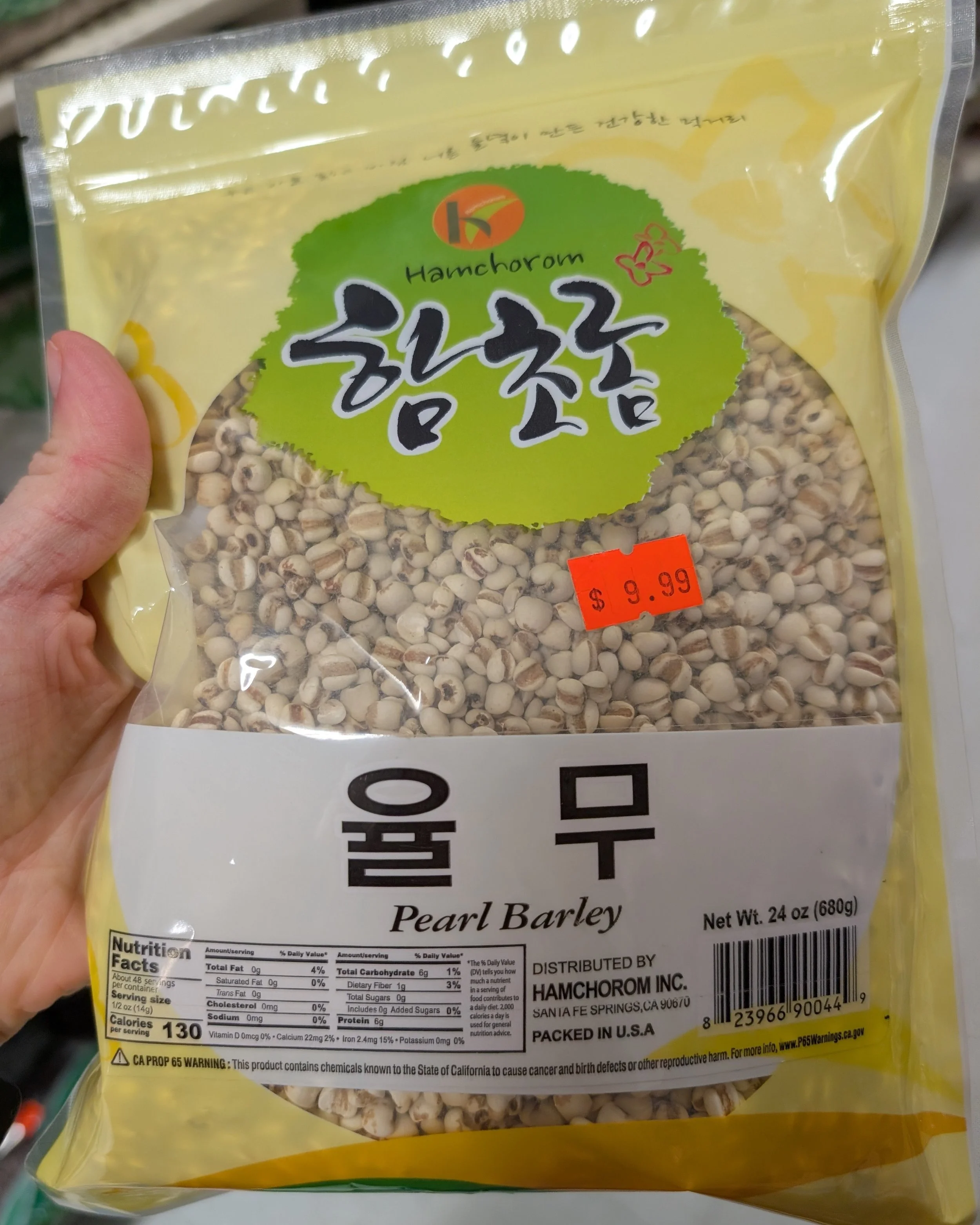
Job's tears (yi yi ren/coix seed) - Despite often being translated as "Chinese barley," Job's tears is not a barley and is gluten-free. It's a healthy whole grain and one of the best foods for draining dampness. It looks like barley, but the grains are larger and rounder. You may also see it labeled as coix seed or yi yi ren. Cook it in soups, or use it like rice in a pilaf.
Where to find it in Des Moines: Wang’s Market, C Fresh Market (or look at an Asian grocery store in your area)
Various names: yi yi ren 薏苡仁, Job’s Tears, coix seed, adlay/adlay millet, hatomugi (Japanese), yulmu (Korean)
Possible online source: Plum Dragon Herbs (but it’s pretty expensive!)
More info on Yi Yi Ren/Job’s Tears:
If you are looking for it in the store, use the translate function on your phone to see if you have the right product. This package says “pearl barley,” but when translated, it will say coix (in this case, in Korean). I found this one at Wang’s Market!
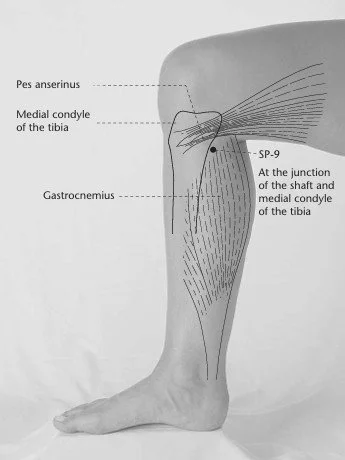
SP9 (Yinlingquan) - A classic acupressure point for resolving dampness, located on the inside and just below the knee. If it's very tender when you press it, that's probably the spot! The picture below is a view of the inside of the leg:
For mental/emotional dampness:
Try journaling with a specific prompt rather than open-ended writing - give the water somewhere to go
Finish one small task when motivation feels non-existent, or you feel like you’re in like mud - completion creates movement
Watch information intake - your system processes everything, including what you read and scroll
The dehumidifier as self-care - Running a dehumidifier in a damp basement or bedroom reduces the external dampness your body has to cope with.
Thanks for listening! I'd love to hear any thoughts or comments you have on the episode - drop them below, or email me at kate@fireweedacupuncture.com.
Take care,
Kate