
Chinese medicine’s name for the everyday work of caring for yourself is yang sheng (養生), often translated as "nourishing life." Yang sheng isn't something that happens in a treatment room, it's the ordinary stuff: when you sleep, what you eat, how you move, and where your energy goes. Yang sheng practices change with the seasons, too!
One of the oldest descriptions of seasonal yang sheng is in the second chapter of the Huangdi Neijing Su Wen, a foundational text that was compiled around two thousand years ago. Each season gets one short paragraph with guidance for that season. Here is the one for winter, from a translation I use:
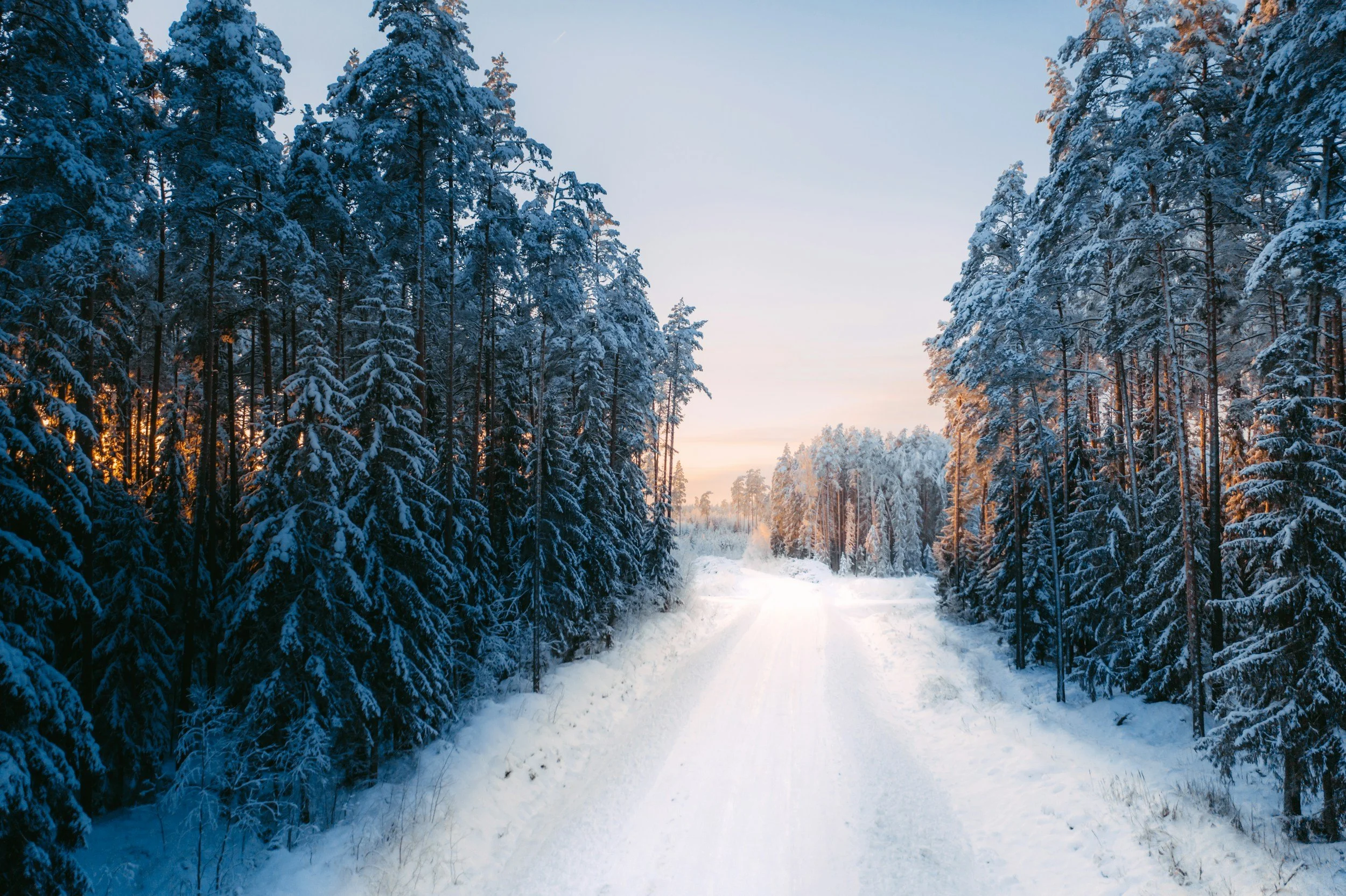
During the winter months all things in nature wither, hide, return home, and enter a resting period, just as lakes and rivers freeze and snow falls. This is a time when yin dominates yang. Therefore one should refrain from overusing the yang energy. Retire early and get up with the sunrise, which is later in winter. Desires and mental activity should be kept quiet and subdued. [...] Stay warm, avoid the cold, and keep the pores closed. Avoid sweating. The philosophy of the winter season is one of conservation and storage.
(From The Yellow Emperor's Classic of Medicine: A New Translation of the Neijing Suwen with Commentary, translated by Dr. Moshing Ni, chapter 2. Translations of the Neijing vary quite a bit, since classical Chinese leaves a lot of room for interpretation!)
There's a lot packed into a few sentences! Here's how I interpret it.
"Conservation and storage"
In the Five Phases (wu xing), winter belongs to Water, and Water pairs with the Kidney and Urinary Bladder organs. In Chinese medicine, the Kidneys hold jing, our deepest reserves. So winter isn't a season of outward energy, it's when things pull inward and down - the way sap goes to the roots of a tree. Whatever doesn't get spent now is there to draw on when spring comes.
"Refrain from overusing the yang energy" goes right along with this. Yang is warmth and activity. In winter, when yin dominates, yang is tucked away and protected, like coals banked under ash overnight. The advice is to leave it there and not burn through it! Each time you rekindle the fire, you need to add more fuel, and it takes a lot of energy.
"Retire early and get up with the sunrise"
This one is pretty literal. Winter nights are long, and the Neijing suggests getting more sleep to match. Most of us can't sleep until sunrise on a workday, and that's okay! Going to bed earlier counts too. A few ways to experiment with this practice:
Dim the lights after dinner so the evening feels like evening.
Move your bedtime 15 minutes earlier at a time, not a whole hour.
Practice slow, reflective activities before bed, instead of high energy ones.
On days off, let yourself wake up without an alarm.
"Desires and mental activity should be kept quiet"
In the original Chinese, the word behind "desires" here is zhi (志), which is also the spirit associated with the Kidneys. It has many translations, including as our willpower, traveling with the flow of our life, or ability to persist. A more literal reading of the line is closer to letting the zhi stay hidden, "as if you already have what you need."
That's a very different message from the one most of us hear in January, when everything is about big resolutions and fresh starts! The Neijing suggests winter is for holding plans close and letting them take shape quietly, the way seeds sit in frozen ground. Spring, the Wood season, is when things push up and out, and is the time for changes and growth. (Remember, in Chinese medicine spring starts in early February!)
In practice:
Pick one thing on your list that can wait until spring, and let it wait.
If you're making goals for the new year, keep them loose and private for now.
Notice where you're spending energy you don't have to, and see if you can reduce or eliminate it.
Consider starting your goals in February instead, to match the spring seasonal shift.
"Stay warm, avoid the cold"
Also literal, and easy to underestimate. The passage pairs warmth with not sweating heavily, since sweating body lets warmth and qi leak out. A few ways to tend your warmth:
Feet: wear socks or slippers, especially on cold floors and outside. Keep your ankles covered too!
Low back: wear a longer layer, or rest with a heating pad on your low back. This area is home to ming men, the Gate of Life, the root of the body's warmth in Chinese medicine.
Food: pick warm, cooked meals like soups, stews, and other meals that simmer or slow cook. Black and dark blue or purple foods are traditional winter foods, and black beans, walnuts, black sesame, and root vegetables are all considered winter foods. Using a slow cooker or store-bought broth with frozen vegetables counts!
Drinks: avoid cold and frozen drinks. Pick warm tea instead, such as cinnamon tea, chai, black tea, or a roasted tea like hojicha.
Movement: focus on gentle movement. Walking, stretching, and qigong suit winter better than workouts that leave you drenched in sweat. This is the time of year to avoid HIIT and hot yoga, especially if you're already feeling run down.
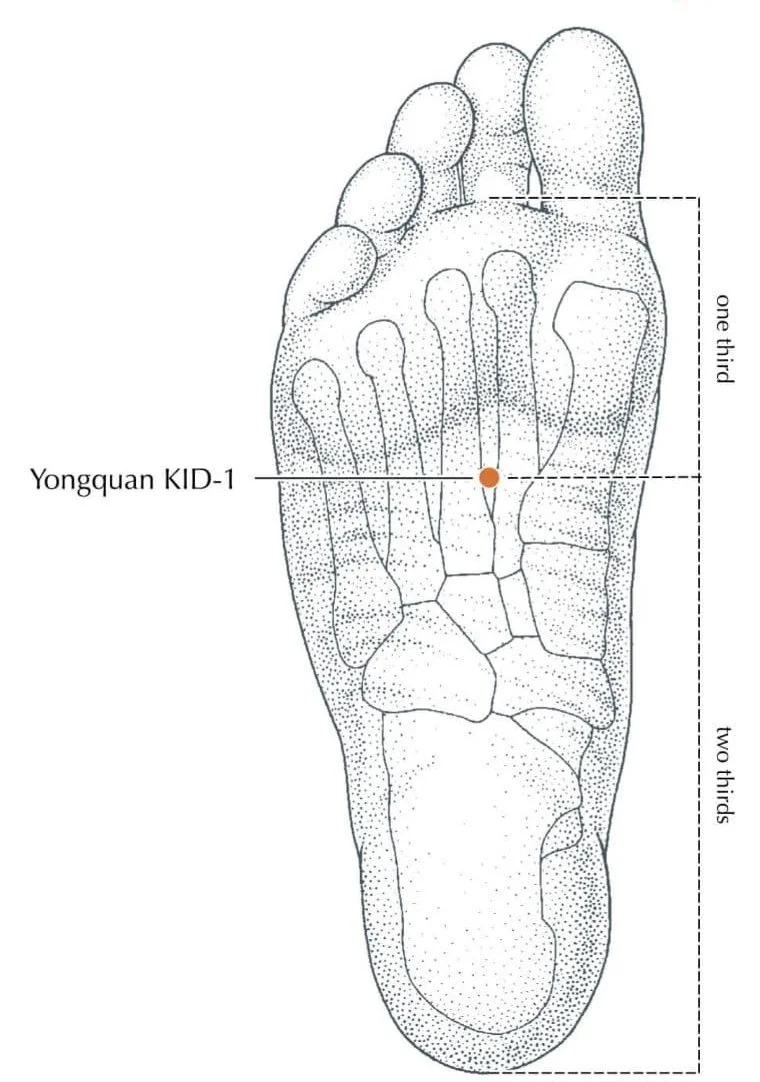
Acupressure: Kidney 1
The Kidney channel begins on the sole of the foot, at a point called Yong quan (湧泉), or Gushing Spring. Imagine it as a spring of water under the frozen ground.
To find it, curl your toes and look for the small dip just behind the ball of your foot, a third of the way down from the base of your toes to your heel, roughly in line with your second and third toes. Before bed, rub it in slow circles with your thumb for a minute or so on each foot. Then put your socks on and go to sleep! You can also press into this spot with a tennis ball while seated, if that is more comfortable.
(Image: A Manual of Acupuncture by Kevin Baker, Mazin Al-Khafaji, and Peter Deadman)
Going deeper
This post is a starting point! My self-paced Winter Wellness class goes further into the Five Phases, how Water connects to the other seasons through the sheng and ke cycles, jing and zhi, and hands-on winter practices like self tui na, gua sha, and moxa. If this post sparked your curiosity, click here to learn more about the class! (It is on sale through December 31, 2026!)
You don't need to do every practice! Choose one suggestion from the Neijing that speaks to you and let that be your winter practice this year.